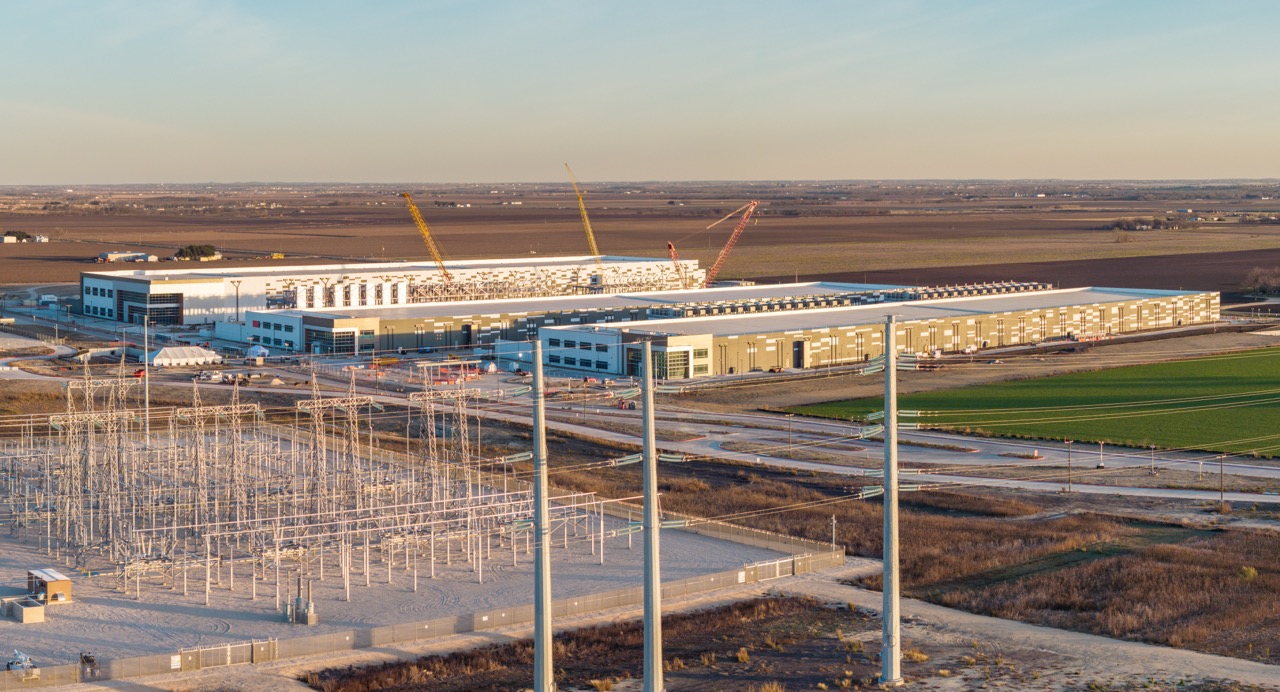
Though the conversation surrounding the rise of AI is often centered on cloud providers and model performance, the AI boom is also a logistics story. Before a single server comes online, thousands of tons of material have to reach a jobsite, including but not limited to steel, aggregate, cement, fuel, and oversized electrical equipment. That cargo does not move abstractly. It arrives by truck, rail, and in many cases, by barge.
For operators and shippers on the U.S. inland waterways, this is a construction cycle that overlaps directly with the commodities already moving on the river system. The question is whether the industry is watching closely enough to see where that demand is building and how it’s likely to flow.
The Build Is Real, and It Is Accelerating
The scale of the current data center buildout is likely more significant than you’ve imagined. Construction spending in the sector has more than tripled since 2023 and now accounts for the majority of growth in private nonresidential construction. Hyperscalers and infrastructure partnerships are committing capital at levels that rival past industrial booms, including initiatives with projected investments reaching into the hundreds of billions.
Power demand tells a similar story. Forecasts suggest U.S. data center electricity consumption could grow from roughly 33 gigawatts in 2024 to 176 gigawatts by 2035, with AI workloads driving most of that increase. That kind of load requires support beyond land and buildings; it requires substations, transmission upgrades, backup generation, and fuel supply.
And this buildout is not limited to coastal tech hubs. States like Ohio, Indiana, Louisiana, and the Carolinas are emerging as major data center markets. These are regions with direct or near access to the Mississippi, Ohio, and Gulf Intracoastal systems. Even a modest share of total construction activity in these corridors translates into significant incremental tonnage.
AI Development Is Powered by Barge Cargo
When you consider the material inputs for a typical data center campus, the overlap with inland waterway commodities suddenly comes into focus.
Steel is foundational. Structural steel for buildings, racks, and support infrastructure moves in bulk. With tariff pressures and supply chain shifts favoring domestic sourcing, mills along the Ohio River Valley and Gulf Coast are well positioned to supply these projects. Barge is often the most efficient way to move large steel volumes into inland markets, particularly where rail congestion or trucking costs become constraints.
Sand and aggregate are even more direct. Data centers are concrete-intensive facilities, from foundations to cooling infrastructure. Aggregate already represents one of the largest commodity groups on inland waterways, and hyperscale construction only amplifies that demand. These commodities are high-volume, low-margin materials where transportation cost matters, which is exactly where barge has an advantage.
Then there’s fuel demand, which shows up early in the project timeline and extends well beyond. Construction equipment runs on diesel, and large sites require continuous deliveries. Beyond the build phase, many data centers install onsite backup generation, often diesel or dual-fuel systems. That creates a longer term pull on refined products that frequently move by tank barge along the river system.
Coal, while not the dominant fuel source it once was, is also still part of the energy mix. As data centers push utilities to secure firm, around-the-clock generation, some regions are leaning on existing coal capacity to stabilize supply. U.S. coal exports reached their highest levels in six years in 2024, and incremental demand tied to power reliability concerns is part of that equation.
On the whole, these are not new cargoes. They are the same categories that already account for roughly 70 percent of inland barge tonnage, petroleum products, agricultural goods, coal, and aggregates. What is new is the demand driver. Instead of seasonal grain flows or refinery cycles, the catalyst is a multi-year infrastructure build tied to AI.
The Transformer Bottleneck: Are Barges the Solution?
If there is a single component constraining the pace of data center expansion, it isn’t steel or concrete. It’s power equipment, particularly large transformers.
These units routinely weigh between 100 and 400 tons, and lead times can stretch beyond two years. Moving them from manufacturing sites to substations is a logistical challenge that can add months to a project schedule. Utilities and engineering firms are now treating transformer procurement as a competitive advantage, sometimes redesigning projects around what equipment can be secured and delivered.
From a transportation standpoint, the role of barges is clear. A U.S. Department of Energy report to Congress identifies waterways as one of the most practical modes for moving large power transformers due to weight and dimensional constraints. Yet the same report highlights a limitation in the fact that many destinations lack direct waterway access or the last-mile infrastructure needed to receive these shipments.
That gap is not purely physical; it’s also a matter of positioning. The inland waterway network already reaches into many of the regions seeing concentrated data center growth, the Ohio River corridor, the Gulf Coast, and parts of the Midwest. Expanding terminal capabilities, heavy lift handling, and intermodal connections could make barges a more central part of this supply chain.
As it stands, the industry risks underselling that capability. As transformer demand tightens and logistics becomes a gating factor, modes that can handle extreme weight and scale reliably will have leverage.
Energy Demand, Grid Pressure, and Tank Barge Implications
The energy side of the equation is just as important as construction materials. Data centers are emerging as one of the largest sources of new electricity demand in the United States. Some estimates suggest they could account for a majority share of load growth through 2030.
That pressure is already shaping how operators think about power. In some cases, it is accelerating investment in onsite generation, fuel storage, and hybrid energy systems. Where grid capacity is constrained or pricing is volatile, operators are looking for ways to control their own supply.
This has direct implications for petroleum and chemical movements on inland waterways. Increased reliance on backup generation and distributed energy systems can translate into higher volumes of diesel and other refined products moving to and from industrial sites. Refineries and petrochemical producers along the river system are watching these signals closely, particularly in regions where data center clusters are forming.
There is also a broader layer. Periods of geopolitical uncertainty, trade policy shifts, or supply chain disruption tend to reinforce domestic sourcing and domestic logistics. Inland waterways, with their cost efficiency and capacity for bulk movement, become more attractive under those conditions.
Connecting the Dots Before the Freight Moves
None of this suggests that AI infrastructure will replace foundational, traditional drivers of barge demand like agriculture or energy exports. What it does suggest is that a new layer of demand is forming, one that overlaps heavily with existing commodity flows but is driven by a different set of signals.
While some of the materials that make AI possible are rare or exotic, many include steel, sand, fuel, and power equipment, the same cargoes that move quietly up and down the river system every day. What is shifting is the scale, the geography, and the urgency.
The opportunity presented to inland operators and shippers with this evolution is less about reinventing the business and more about paying attention to where these projects are taking shape. Tracking construction pipelines, utility investments, and industrial development along the river corridors may become just as important as monitoring crop forecasts or export demand.
While the AI buildout is often framed as a digital transformation, the reality is that on the ground, and on the water, it still looks a lot like an old fashioned infrastructure boom. The operators who recognize that early, and position themselves accordingly, will be the ones moving the freight that makes it possible.

.png)