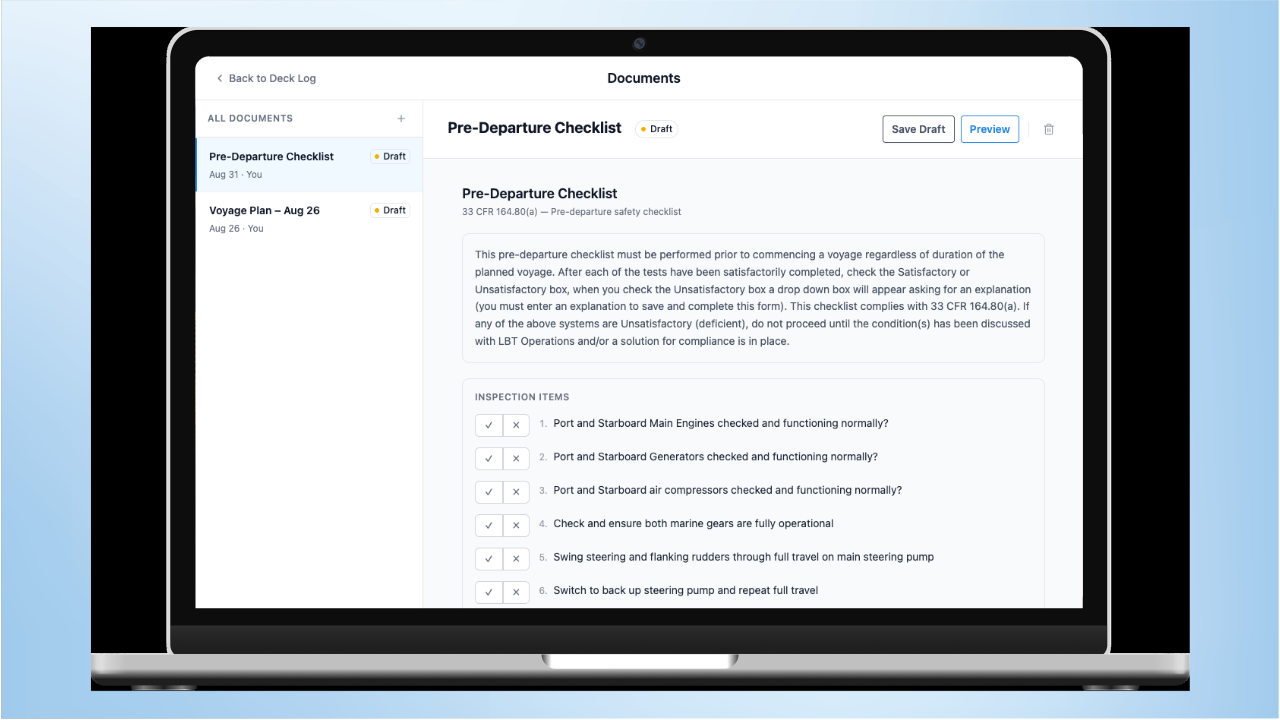

Handwritten logbooks, whiteboards, and text messages leave events hard to find, hard to read, and easy to lose. Critical details stay on the boat instead of reaching the people who need them.

Known operations come with required entries and inventory readings. When a step gets skipped, the gap often isn't discovered until billing, reporting, or an audit.


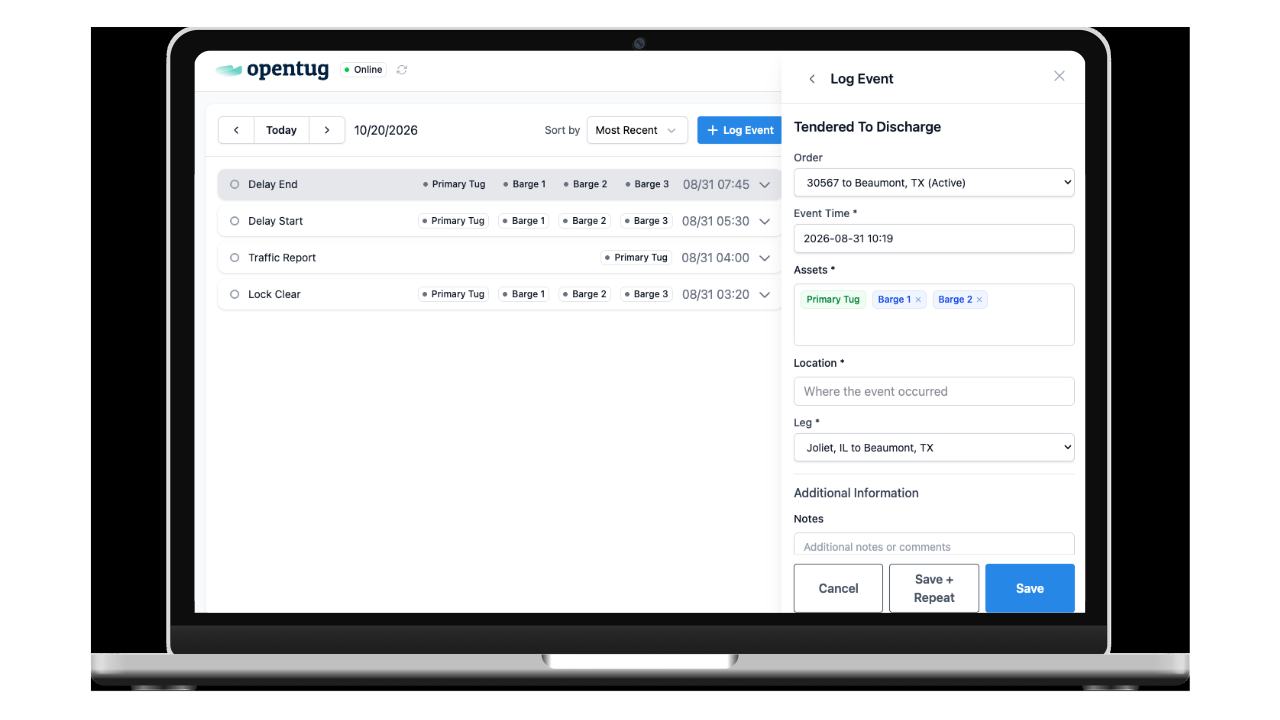
Assets drop in and out of coverage on the river. Tools that need a constant connection force crews to wait, re-enter data later, or skip logging altogether.

Without a timely, consistent record, office teams chase crews for updates and piece together what happened from calls and emails before they can report or invoice.
Deck Log puts a structured logbook in the wheelhouse and delivers every entry to the office, online or off.



BargeOS® connects commercial planning, execution, and financial workflows into a continuous loop where every decision feeds the next. Deck Log captures what actually happens on board during execution, giving the office a reliable record to report on fleet activity and validate voyages before performance data feeds back into future planning.